- Engineering
- Measuring systems
- Machine qualification
-
Components
-
Systems
-
Learn more
-
- Expertise
-
About IBS
-
Our Story
-
Learn More
-

When your scientific instrument requires outstanding precision and you need an expert partner, we can deliver a solution made to order.

We have solved amazing challenges with our customers. Read about just some of the solutions created below.
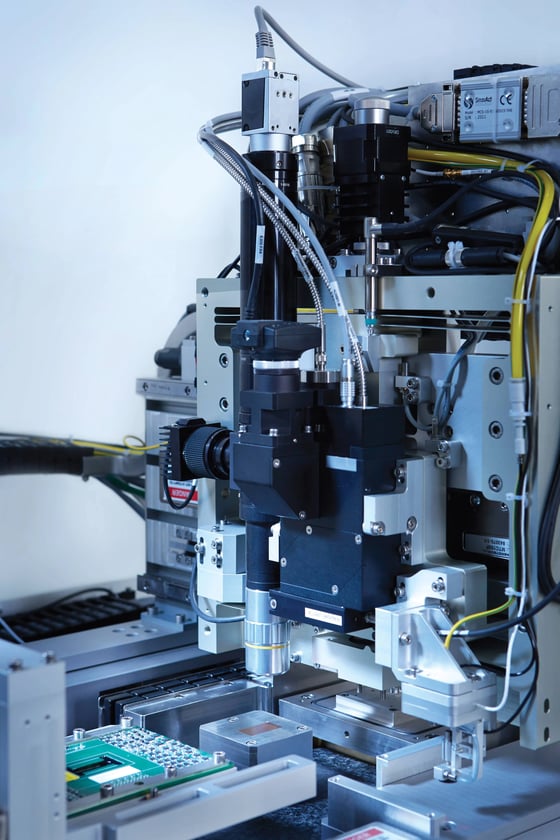
As part of the ALICE detector upgrade, CERN required a sensor module assembly machine. ALICIA was developed to measure and assemble the 15,000 sensor chips which make up the new detector. Working closely with CERN teams across the globe, the machine accommodated changing requirements as the sensor chip technology developed; from chip size to positioning accuracy and test protocols. The whole assembly and inspection procedure of one sensor module generates 0.5 terabytes of information. The collection and processing of this amount of big data was an additional challenge which was solved. The first machine, ALICIA 1, passed the site acceptance test at CERN and seven more machines have since been delivered by IBS to sites around the globe.

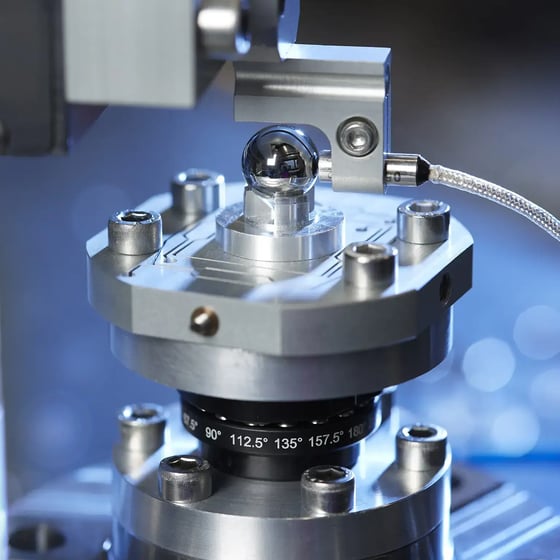
Measurement of high precision calibration spheres with an uncertainly of less than 10 nm’s was required. Nanometre level accuracy rotary motion is applied for X-ray tomography carried out by leading synchrotrons. The calibration procedure enabled optimisation of artefact selection improving traceability and making extensive cost savings.
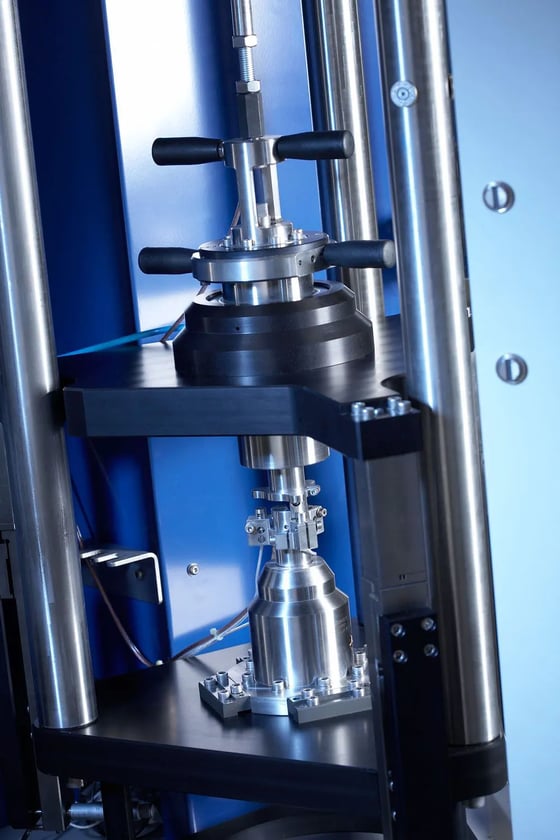
A leading scientific research group required a test setup to be used in an X-ray micro-tomography apparatus. Research samples needed to be stressed thermally and mechanically with synchronous rotation. The delivered module enabled axial stressing force between -500 and 400N to be applied with temperatures of 300 to 1000 K, while maintain a radial asynchronous error below 200 nm plus linear position control of 0.1 µm. This unique system enabled ground breaking materials research to be been accomplished.
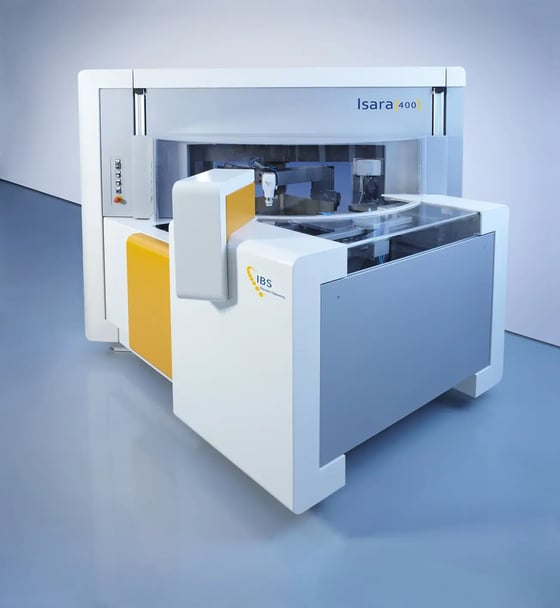
A nano CMM was required by the research institute to measure high aspect ratio free form optics, used for synchrotrons. ISARA nano CMM can capture the full 3-D form measurement with nanometer resolution. As the ISARA is a contact measurement system with an ultra-low force touch probe, it can measure up to + and – 90 degree contact angle which is impossible with optical techniques.
An automated alignment module was required for SEM optics. In the strive to continuously improve resolution of these microscopes and to create smaller measurable distances with as little as possible distortions, a new microscope was planned. The current alignment tools were not sufficiently accurate. The new tool must pass in the current procedures of the customer. An intelligent data solution was implemented wherein automated feedforward of measurement data removed a critical limitation to accuracy. Potential human errors were erased from the process and automated quality data tracking implemented.
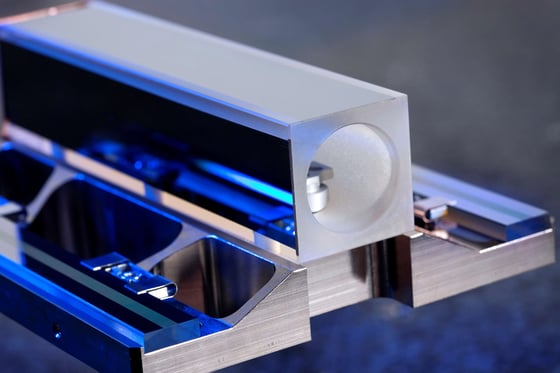
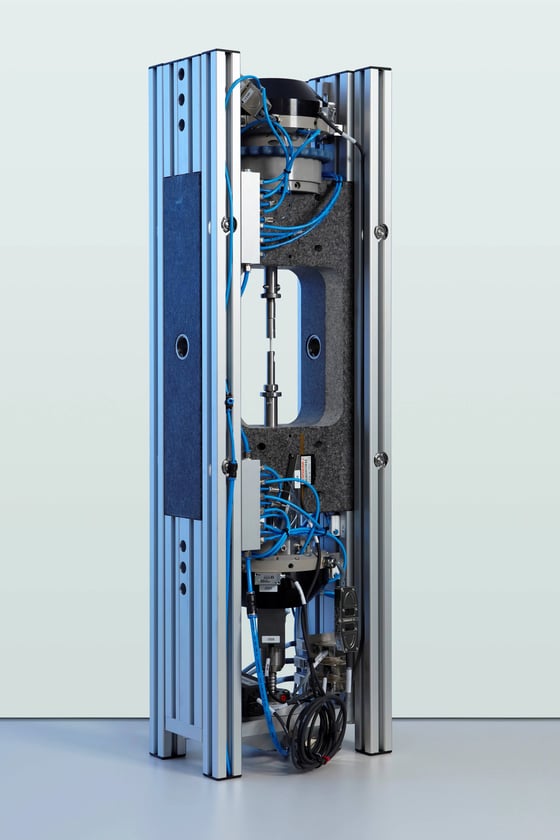
An instrument was needed to test the failure mechanisms of adhesives, to inform the allowable stress for adhesive joints. Glues were to be tested over time and under a range of force conditions. An instrument was developed to implement tensile, shear and bending tests. Through plasticity curve data, failure mechanisms can be understood. In this way selection of failure criteria based on the mode of failure was enabled.